
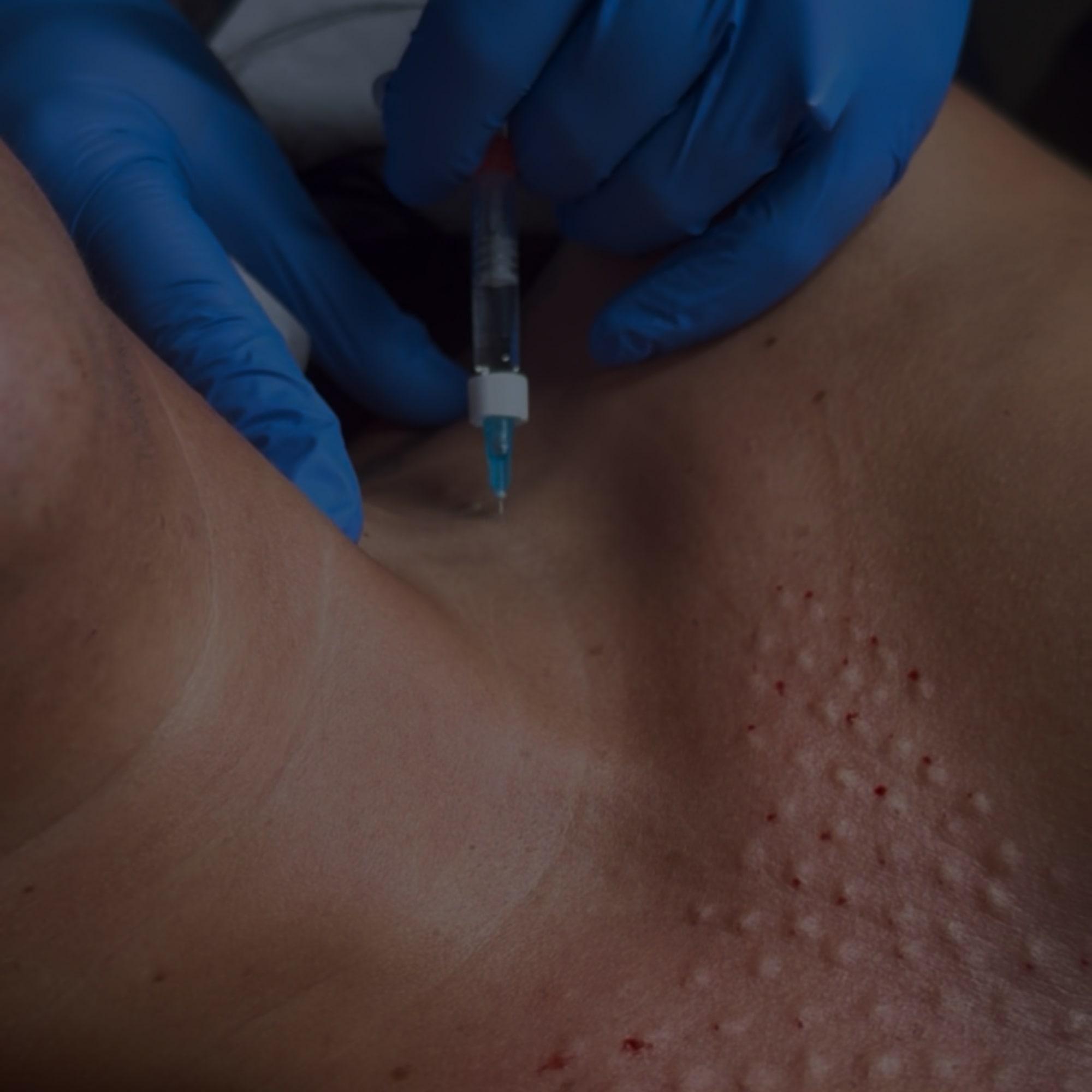
When it comes to skin rejuvenation, Profhilo and polynucleotides are two treatments that are often frequently compared. Although both are injectable treatments that are designed to improve the quality and appearance of the skin, they work in different ways and can be better suited to different concerns. If you’re unsure whether Profhilo or polynucleotides are right for you, understanding the key differences is a great place to start.
What is Profhilo?
Profhilo is an injectable treatment containing a high concentration of hyaluronic acid. Unlike a traditional dermal filler, it is not intended to add facial volume. Instead, it spreads beneath the skin, providing hydration while stimulating collagen and elastin production.
Profhilo can be particularly useful for skin that looks dull, feels dehydrated or has started to lose firmness. It is commonly used on the face, neck and decolletage, leaving the skin looking fresher, smoother and more hydrated.
What Are Polynucleotides?
Polynucleotides, sometimes referred to as PDRN treatments, use purified DNA fragments to support the skin’s natural regenerative processes. Rather than simply providing hydration, they are designed to help improve overall skin quality and encourage collagen and elastin production.
They can be used for a range of concerns, including fine lines, uneven texture, acne scarring, skin laxity, and the delicate under-eye area. This makes polynucleotides a versatile option for people whose main concern is skin regeneration rather than just hydration on its own.
Polynucleotides vs Profhilo: Which is Better?
This totally depends on your skin and what you’re hoping to improve. Profhilo may be preferable if dehydration, dullness or reduced firmness are your main concerns. Polynucleotides may be more suitable if you are looking to improve texture, fine lines, scarring or general skin quality. Both treatments can produce subtle, natural looking improvements without the volumising effect that’s associated with dermal fillers.
Which Treatment Lasts Longer?
Results can vary between individuals, and factors such as your skin condition and treatment plan can affect longevity. Profhilo generally lasts for around six months with maintenance treatments often recommended twice a year.
Polynucleotide results can last around six to twelve months, although a course of treatments is usually recommended initially. Your practitioner can advise how many sessions are appropriate for your skin type and personal goals.
How Much Do Profhilo and Polynucleotides Cost?
At Faces By Bae, Profhilo starts from £200 per session, while polynucleotide treatments range from £235 to £250 per session. The final cost depends on the treatment selected, area being treated and the number of sessions required.
It is also worth remembering that the cheapest option isn’t necessarily the most suitable one. Choosing a treatment based on your individual skin concerns is more important than simply comparing prices.
Profhilo or Polynucleotides: Which Should I Choose?
If you are still unsure, a professional consultation can help you decide. Your practitioner can assess your skin, discuss your concerns, and explain whether Profhilo, polynucleotides or another treatment would be more suitable. For more information, explore the Profhilo treatment or polynucleotide treatments available at Faces By Bae.